Published October 19, 2026 at 9:38 AM EDT
Scrap Labs introduces a desktop LPBF printer using FDM-printed components, aiming to lower metal 3D printing costs.
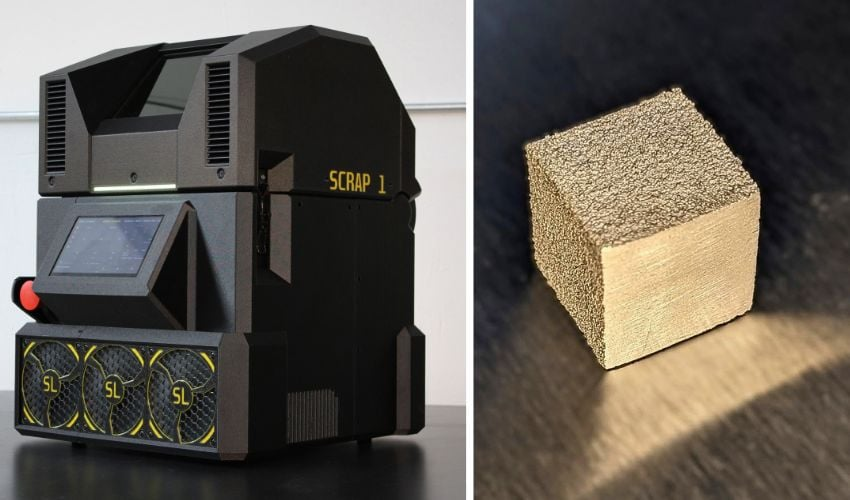
Scrap Labs, a Boulder-based startup, is developing a desktop laser powder bed fusion (LPBF) printer called the Scrap 1. The machine is built almost entirely from FDM-printed parts, aiming to bring industrial-grade metal 3D printing to smaller spaces. This approach leverages the widespread accessibility of FDM technology to create a more affordable and compact solution for metal printing. The company’s goal is to make metal additive manufacturing more accessible to hobbyists, small workshops, and educational institutions.
A Desktop LPBF Printer Built From FDM Parts
The Scrap 1 is designed to print metal directly without binders or sintering steps. It features a 200 W laser and a 100 mm build volume, with 316L stainless steel as the initial material. The company has not yet shipped the machine, and all specifications are described as targets. The design aims to provide a balance between performance and cost, with the potential to revolutionize how metal parts are produced at a smaller scale. The machine’s development is still in progress, with a planned production launch in June 2027.
The design leverages open-source firmware like Klipper, which is commonly used in hobby FDM printers. This approach is intended to improve motion control and reduce costs. The company claims this allows for efficient performance on a desk or workbench. By integrating open-source software, Scrap Labs aims to create a more flexible and customizable system that can be adapted by users with varying levels of technical expertise. This strategy also aligns with the broader trend of open-source innovation in the 3D printing industry.
Scrap Labs has not provided independent verification of its performance claims. The machine is still in development, with a planned production launch in June 2027, initially in the United States. The company emphasizes the importance of field testing and user feedback in refining the design before full-scale production. This cautious approach reflects the challenges of bringing a new type of metal 3D printer to market, particularly one that relies on FDM-printed components for its mechanical structure.
Target Specifications and Material Focus
The company’s founder, Matt Woods, previously worked at SpaceX and Xact Metal. He has described the Scrap 1 as a scalable and cost-effective solution for metal printing. The machine is intended for hobbyists, prosumers, and small workshops. Woods’ background in aerospace and metal additive manufacturing gives the project credibility, as he has firsthand experience with the challenges and opportunities of industrial metal 3D printing. His vision is to make high-quality metal parts more accessible to a wider audience.
Scrap Labs has not released final pricing details, but estimates suggest a DIY kit could start at $9,600, with a fully assembled version at $17,990. These figures are based on early announcements and may change before production. The pricing strategy aims to position the Scrap 1 as a more affordable alternative to traditional industrial LPBF printers, which often cost six figures. The company is targeting individuals, makers, labs, and schools, emphasizing the potential for widespread adoption.

The company emphasizes thermal stability, laser control, and motion precision in its design. It also highlights intuitive recovery workflows and precision sensing for reliable metal printing. These features are intended to support consistent performance in small-scale environments. The focus on thermal management and precision control is critical for ensuring the quality and reliability of printed metal parts, especially in a compact desktop system.
Design Philosophy and Open-Source Influence
Scrap Labs aims to reduce the barrier to entry for metal additive manufacturing. It claims its system is more affordable than traditional industrial LPBF printers, which often cost six figures. The company is targeting individuals, makers, labs, and schools. By making metal 3D printing more accessible, Scrap Labs hopes to foster innovation and experimentation in a variety of fields, from engineering to art and design. This aligns with the broader trend of democratizing advanced manufacturing technologies.
The Scrap 1 is designed to be compact and easy to transport. It fits on a workbench and is intended for use in shops, labs, or other small spaces. The company’s website notes that the machine is built for both performance and accessibility. This design philosophy reflects the growing demand for flexible and space-efficient manufacturing solutions, particularly in environments where traditional industrial equipment is not feasible.
Pricing and Availability Plans
Scrap Labs has not yet provided details on the availability of materials or consumables. It states that machines, materials, and accessories will be available directly through its website, with no vendor lock-in. This approach is intended to give users more flexibility. The company’s commitment to open access and user choice is a key differentiator in the competitive 3D printing market, where many manufacturers rely on proprietary systems and components.
The company’s broader vision includes making advanced manufacturing tools accessible in various environments. It aims to support both Earth-based and off-world applications, as part of a long-term goal to enable multi-planetary human expansion. This ambitious vision reflects the growing interest in space exploration and the need for sustainable and adaptable manufacturing solutions. The Scrap 1 could play a role in supporting future missions by providing a compact and reliable metal 3D printing solution.
Scrap Labs is currently accepting deposits for priority access and has a free waitlist for updates. The company is building aggressively with a disciplined hardware roadmap, focusing on field feedback and reliability validation. This approach ensures that the final product meets the needs of its target users while maintaining high standards of quality and performance. The company’s commitment to iterative development and user engagement is a key factor in its long-term success.
Log in to leave a reply. Every comment is moderated before it appears publicly.