Published October 30, 2026 at 11:35 PM EDT
A new tool-changer allows 3D printers to embed yarn during printing, opening new possibilities for textile integration.
A team from Delft University of Technology has developed FilaLoom, a tool-changer that allows 3D printers to embed yarn during the printing process. The system is designed to work with the Bambu Lab A1, a popular desktop FDM printer. This innovation represents a significant step in merging traditional textile techniques with modern 3D printing technology. By enabling the printer to handle both filament and yarn, FilaLoom expands the creative possibilities for makers and engineers alike.
A Tool-Changer That Weaves Yarn Into Prints
FilaLoom is notable for its simplicity. It does not require additional electronics or permanent modifications to the printer. Instead, it uses the printer’s existing motion system to switch between extruding filament and depositing yarn. This approach minimizes the complexity and cost of integrating yarn into 3D prints. The system’s design leverages the printer’s existing mechanics, making it an accessible solution for users who want to experiment with new materials without significant investment.
The tool-changer is a retrofit, meaning it can be added to existing printers without altering their design. This makes it accessible to hobbyists and small workshops looking to experiment with new materials. The retrofit nature of FilaLoom ensures that users can enhance their existing printers without the need for a complete system overhaul. This flexibility is particularly valuable for those who want to explore new applications without committing to a new printer.
How FilaLoom Works Without Extra Electronics
The system uses a combination of printed parts, a blunt-tip needle, and magnets to switch between tools. This mechanical approach reduces the complexity and cost of the add-on. The use of standard components ensures that the system is both durable and easy to maintain. The mechanical design also allows for quick tool changes, which is essential for maintaining the efficiency of the printing process.
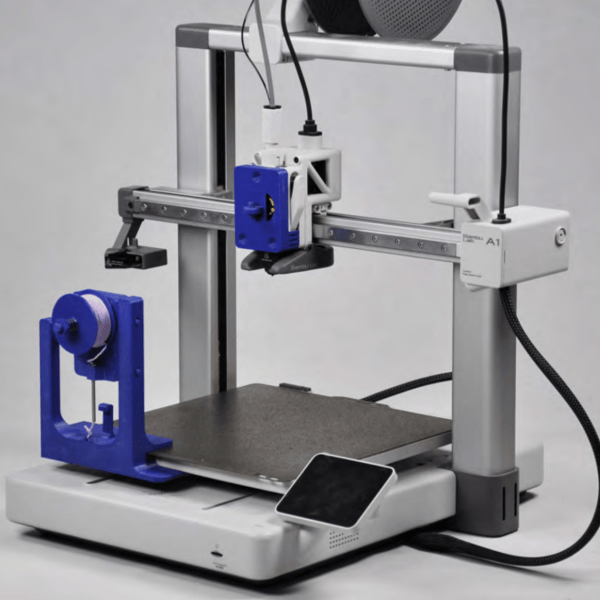
The yarn depositor can reach 25 mm below the nozzle, ensuring that the yarn is placed on top of or between printed layers without interference. This clearance is critical for maintaining print quality. The precise positioning of the yarn allows for seamless integration with the printed layers, resulting in a more cohesive and functional final product. This feature is particularly useful for creating hybrid objects that combine structural and textile elements.
The maximum speed for yarn placement is 25 mm/s. Beyond this, the accuracy of the yarn placement decreases, which may limit its use in high-speed printing applications. This speed constraint means that users must balance the need for efficiency with the quality of the final product. While slower speeds may be necessary for optimal results, they also increase the overall time required for each print.
A Retrofit That Uses Existing Printer Motion
FilaLoom’s design is inspired by existing tool-changers, but it takes a different approach. Unlike systems built into printers from the start, FilaLoom reuses the printer’s motion system to handle the tool change. This approach allows for greater flexibility and adaptability, as the system can be easily integrated into a variety of existing printers. The design also emphasizes simplicity, making it easier for users to understand and operate.
The system’s bill of materials is minimal, consisting of only a few standard parts. This suggests that the design relies heavily on mechanical precision rather than complex electronics. The use of standard components also makes the system more cost-effective and easier to produce. This simplicity is a key advantage, as it reduces the potential for technical issues and makes the system more user-friendly.
The project highlights the potential for integrating textiles into 3D printing. By embedding yarn during the printing process, users can create parts with soft textures or embedded cables. This capability opens up new possibilities for creating objects that combine the structural integrity of 3D printed materials with the flexibility and comfort of textiles. The integration of yarn can also enhance the functionality of printed objects, such as by allowing for the creation of flexible joints or embedded wiring.
Limitations and Practical Considerations
The research team notes that while the concept of combining yarn and plastic is not new, FilaLoom offers a more streamlined and accessible method for doing so. Previous attempts to integrate textiles into 3D printing have often required significant modifications or specialized equipment. FilaLoom simplifies this process, making it more accessible to a wider range of users. This accessibility is a key factor in the system’s potential impact on the 3D printing community.
The system’s simplicity makes it appealing for hobbyists and small-scale manufacturers. It allows for experimentation without the need for expensive or complex modifications. This affordability and ease of use make FilaLoom an attractive option for those who want to explore new applications of 3D printing. The system’s design also encourages innovation, as users can experiment with different materials and techniques to achieve unique results.
FilaLoom represents a step forward in the integration of traditional materials with modern 3D printing technology. It opens up new possibilities for creating hybrid objects with both structural and textile elements. By enabling the seamless integration of yarn into 3D prints, FilaLoom expands the range of applications for 3D printing, making it a valuable tool for makers, engineers, and designers alike.
Log in to leave a reply. Every comment is moderated before it appears publicly.