Published October 30, 2026 at 11:18 PM EDT
An open-source project uses fibre-optic UV light to print microscopic 3D structures, including a 0.5 mm Benchy.
Open-Source UV Head Enables Microscopic 3D Printing
The PIKA UV Head operates by directing UV light through an optical fibre, which is then used to solidify liquid resin in specific locations. Unlike traditional resin printers that cure entire layers at once, this method works more like a point-based curing system. The light source is not directly attached to the build platform, allowing for greater flexibility in positioning and reducing the need for precise alignment. This design enables the system to adapt to various 3D printing platforms, including the μRepRap.
The hardware list for the PIKA UV Head includes standard commercial components, making it accessible for hobbyists and makers. A single-mode fibre optic cable is used, which is modified by cutting it with a hacksaw. A UV LED module, often found in hobbyist UV lamps, is connected to the fibre through a custom adaptor. This setup allows for a compact and modular design that can be adapted to existing 3D printing systems, leveraging widely available parts.
Design and Workflow of the PIKA UV Head
The UV head’s design is based on an existing method for in-situ curing of UV resin, which has been adapted for use with the μRepRap platform. The system is documented on the project’s GitHub wiki, which includes a parts list, wiring diagrams, and a G-code filter for PrusaSlicer. This makes it easier for users to replicate the design and integrate it into their own workflows, ensuring transparency and reproducibility.
The UV beam from the system can cure resin to a depth of about 100 micrometres, which is significantly deeper than the 9 micrometre resolution of the printed structures. This depth can be both a benefit and a limitation, as it allows for faster curing of larger volumes but makes overhangs more challenging to print. The project suggests using a UV-absorbing dye, such as curcumin, to mitigate this issue, providing a practical solution for improving print quality.
The PIKA UV Head is designed to be compatible with existing 3D printing hardware, particularly the μRepRap platform. The system uses standard components, which means that users can source parts locally without needing specialized suppliers. The design also allows for some tolerance in print bed leveling, as the curing depth provides a margin of error for minor imperfections, making the system more user-friendly for beginners.
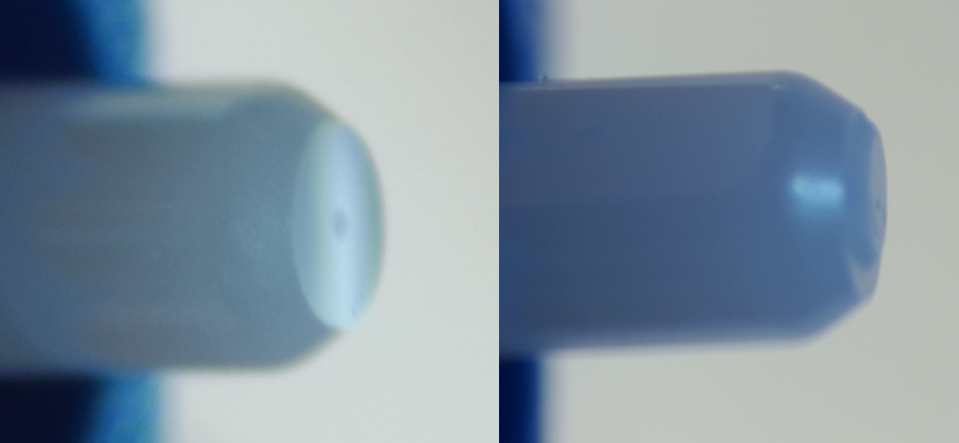
Hardware and Materials Used in the UV Head Assembly
The project’s documentation includes a step-by-step guide for assembling and operating the UV head. This includes instructions for modifying the optical fibre, aligning the UV LED module, and integrating the system with a 3D printer’s motion system. The guide also covers post-processing steps, such as cleaning and curing the printed parts, which are necessary for achieving the desired structural integrity and surface finish.
The UV head’s performance has been demonstrated with a 0.5 mm Benchy model, which is significantly smaller than typical 3D prints. The project notes that overhangs remain a challenge, and future revisions aim to address this limitation. The system’s resolution and precision make it suitable for applications requiring high detail, such as micro-mechanics or intricate prototypes, opening up new possibilities in microfabrication.
The PIKA UV Head is part of the broader RepRapMicron initiative, which focuses on creating miniature 3D printing solutions. This project builds on the principles of the original RepRap, which aimed to make 3D printing accessible and self-replicating. The UV head represents a new direction in the development of small-scale additive manufacturing technologies, demonstrating how open-source innovation can drive progress in niche areas.
Challenges and Limitations of the UV Curing Process
The use of fibre-optic technology in the UV head allows for a compact and flexible design. The system can be adapted to different 3D printing platforms, and the components are widely available. This makes it an attractive option for makers and researchers interested in exploring the potential of micro-scale 3D printing. The project’s emphasis on open-source documentation ensures that others can build upon and improve the design.
The project’s documentation emphasizes the importance of testing and refinement. While the current version of the UV head can produce high-resolution prints, it is still in the early stages of development. The team encourages users to experiment with the design and contribute to its improvement through the project’s open-source platform. This collaborative approach fosters innovation and ensures continuous improvement.
The PIKA UV Head demonstrates the potential of combining off-the-shelf components with innovative design to achieve micro-scale 3D printing. While it is not yet a commercial product, the project provides a foundation for further development and experimentation in the field of miniature additive manufacturing. Its open-source nature and practical approach make it a valuable resource for the 3D printing community.
Log in to leave a reply. Every comment is moderated before it appears publicly.