Published October 22, 2026 at 10:55 PM EDT
A new open-source 3D printer developed by UC Berkeley researchers allows users to create whole parts in 90 seconds for around $1,600.
OpenCAL: A New Approach to 3D Printing
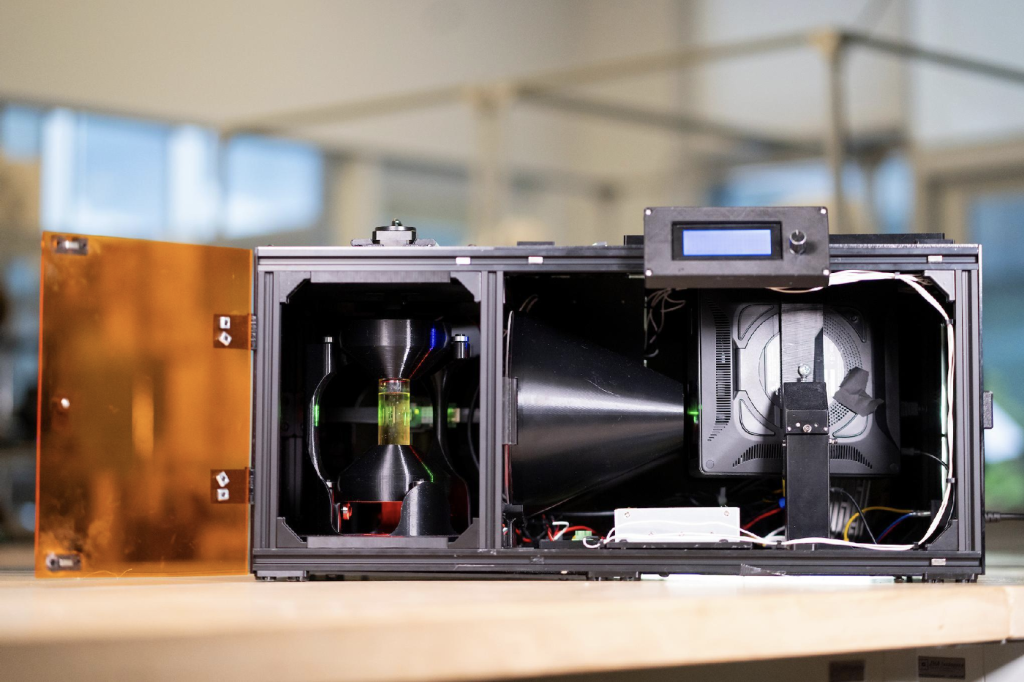
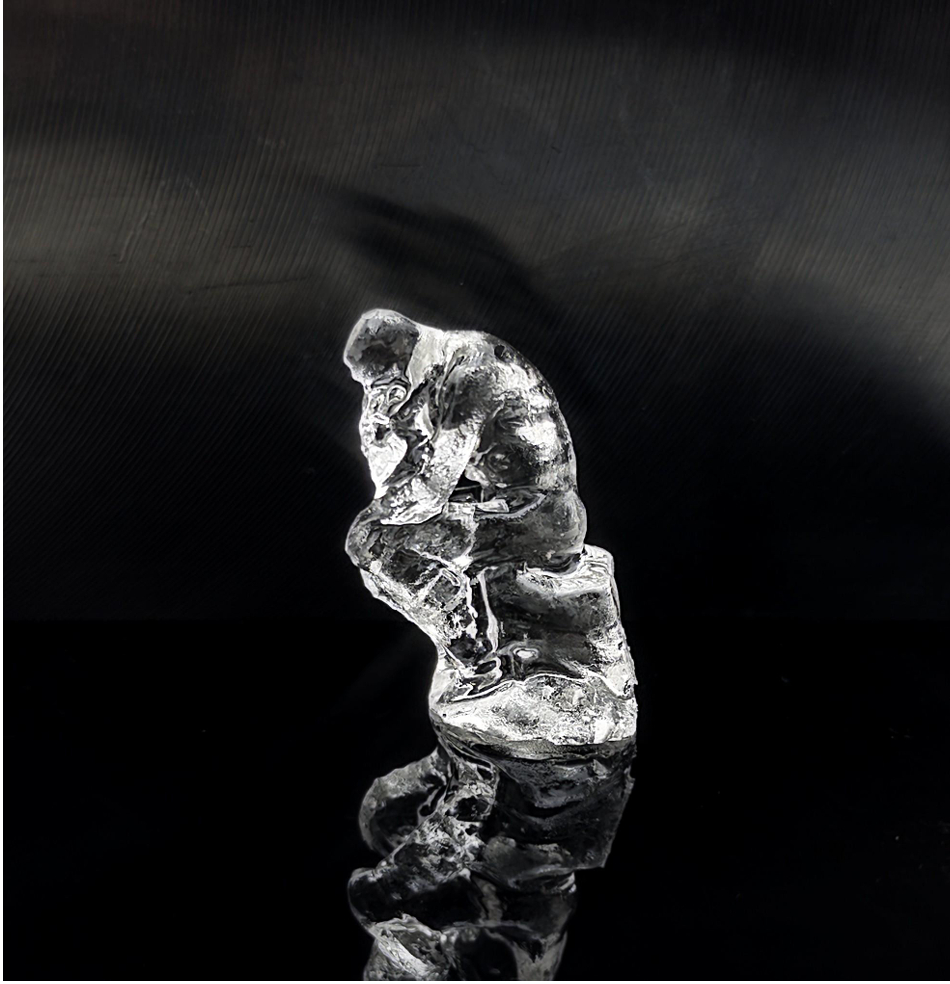
The printer operates by projecting calculated light patterns into a rotating vial of photosensitive resin. The resin solidifies where the light accumulates, forming a complete object simultaneously. This technique, known as Computed Axial Lithography (CAL), was first developed in 2017 and published in 2019. The process allows for the creation of intricate designs that would be difficult to achieve with traditional 3D printing methods. Unlike conventional printers, OpenCAL does not require a moving print head or support structures, making it more efficient and less complex.
All design files, software, and resin formulations for OpenCAL are publicly available, making it an open-source project. The team behind the project includes over 40 contributors, primarily UC Berkeley students, who worked on the design and development over two years. The project is part of a broader movement to make advanced manufacturing technologies more accessible to hobbyists, educators, and researchers. By providing open-source tools and documentation, the team aims to encourage further development and experimentation by the wider maker and research communities.
How OpenCAL Works and What It Produces
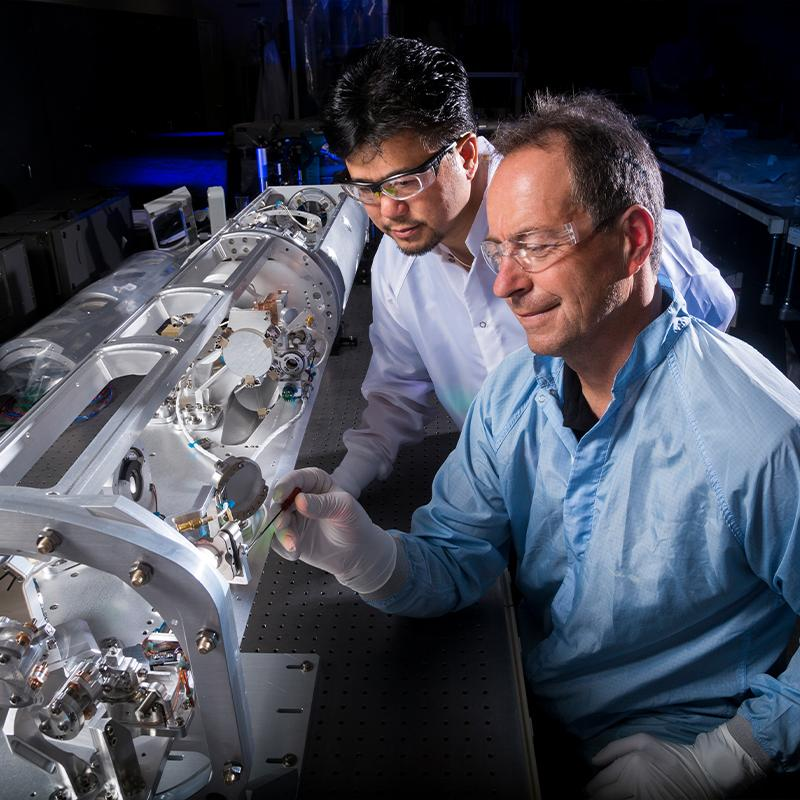
The OpenCAL project is based on research conducted in Professor Hayden Taylor’s lab at UC Berkeley and in collaboration with Lawrence Livermore National Laboratory. The technology has been applied in bioprinting and glass fabrication, and it has been tested in space-related experiments through the SpaceCAL program. The collaboration between academic and national laboratory researchers has helped advance the CAL technology and bring it to a broader audience. This partnership highlights the potential for open-source projects to bridge the gap between research and practical applications.
The printer can be assembled for approximately $1,600 using commercially available parts. The resin used in the process is manufactured by Formlabs and sold by Prusa Research in the United States. This makes the technology accessible to a wider audience. The affordability of the printer, combined with the availability of open-source designs, allows individuals and small organizations to experiment with volumetric 3D printing without the need for expensive proprietary systems. This democratization of technology is a key goal of the OpenCAL project.
Unlike traditional 3D printers, OpenCAL does not require a moving print head or support structures. The entire object forms at once, reducing the time and complexity of the printing process. This method also minimizes material waste and post-processing requirements. The elimination of support structures is a significant advantage, as it reduces the need for additional steps after printing. This makes the process more efficient and user-friendly, especially for those new to 3D printing.
The Open-Source Nature of the Project
The software used in OpenCAL inverts the principles of a CT scan, calculating the light projections needed to build a physical object. This approach allows for the creation of complex geometries that would be difficult to achieve with conventional 3D printing methods. The software is built on VAMToolbox, an open-source Python library that performs the tomographic optimization required for CAL. This integration of open-source software with hardware design ensures that the project remains accessible and adaptable for future improvements.
The OpenCAL project is part of a broader effort to make advanced manufacturing technologies more accessible. By providing open-source tools and documentation, the team aims to encourage further development and experimentation by the wider maker and research communities. The project has received attention for its potential to revolutionize rapid prototyping and small-scale manufacturing. Its ability to produce whole parts in under a minute could be particularly useful in industries requiring quick iterations of design.
The project has received attention for its potential to revolutionize rapid prototyping and small-scale manufacturing. Its ability to produce whole parts in under a minute could be particularly useful in industries requiring quick iterations of design. The technology has been applied in bioprinting and glass fabrication, and it has been tested in space-related experiments through the SpaceCAL program. These applications demonstrate the versatility of the technology and its potential for use in a wide range of fields.
Potential Applications and Future Development
While the OpenCAL printer is still in the early stages of development, it represents a significant step forward in volumetric 3D printing. The technology has the potential to be adapted for a variety of applications, including medical devices, aerospace components, and custom consumer products. The project’s open-source nature allows for continuous improvement and innovation, as users and developers from around the world contribute to its development.
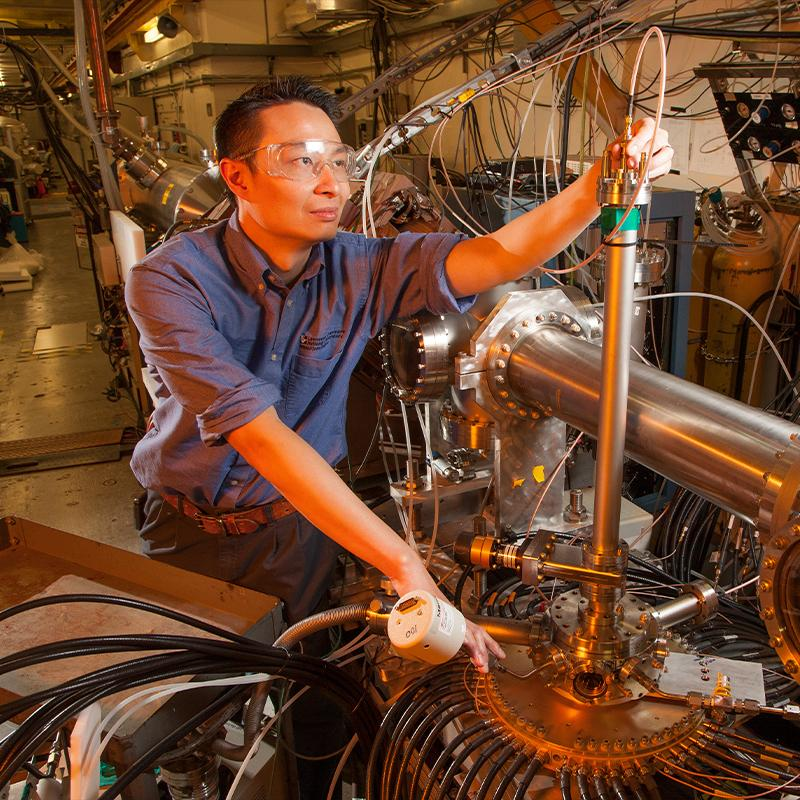
The collaboration between UC Berkeley and Lawrence Livermore National Laboratory highlights the intersection of academic research and national laboratory expertise. This partnership has helped advance the CAL technology and bring it to a broader audience. The project has also been tested in space-related experiments, demonstrating its potential for use in extreme environments. These collaborations underscore the importance of interdisciplinary research in advancing new technologies.
The OpenCAL project is an example of how open-source initiatives can drive innovation in manufacturing. By making the technology freely available, the team hopes to foster a community of users who can contribute to its improvement and expansion. The project has already gained traction among universities, national laboratories, and makerspaces, with several institutions building and testing the printer. This growing community of users and developers is essential for the long-term success and evolution of the project.
Log in to leave a reply. Every comment is moderated before it appears publicly.