Published October 24, 2026 at 10:36 PM EDT
GC America and SprintRay introduce a new hybrid ceramic resin designed exclusively for the Midas Digital Press, highlighting a shift in material and machine development.
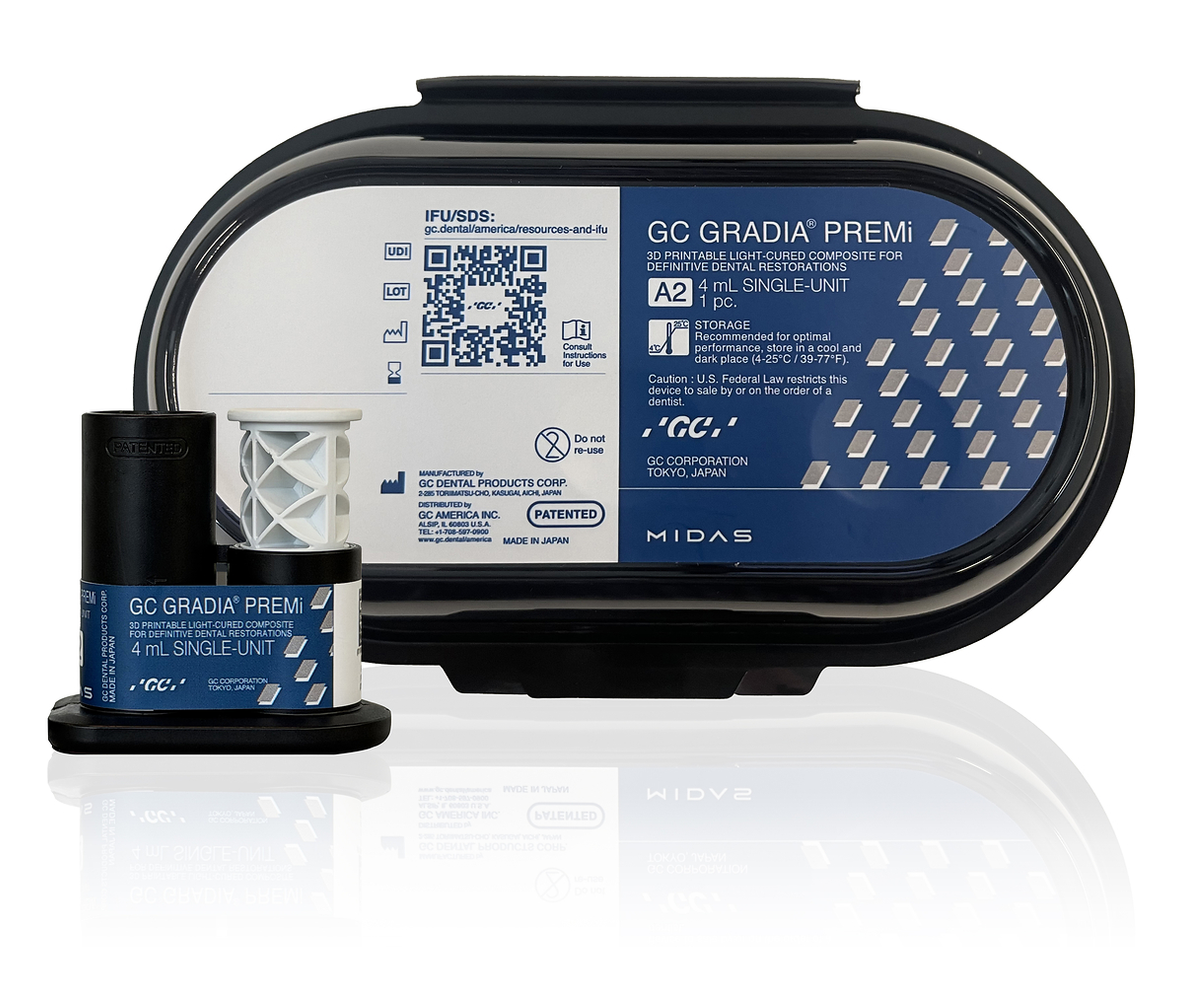
GC America and SprintRay announced the launch of GC GRADIA PREMi, a hybrid ceramic resin designed exclusively for the Midas Digital Press. The material was unveiled at the 3DNext summit in Miami on October 10, with press releases following on October 13. The partnership between the two companies was first announced in 2026, and this is the first product to emerge from their collaboration. The exclusivity of the resin to the Midas platform marks a significant shift in how materials are developed and integrated with printing technologies.
New Material Launches with Machine-Specific Design
The release highlights a shift in how materials and machines are developed. Rather than adapting machines to fit materials, the Midas Digital Press was designed to accommodate a specific resin formulation. GC describes the material as its first restorative designed for the Midas, emphasizing the machine’s unique capabilities in handling highly viscous and filled resins. This approach reflects a growing trend where material science and machine design are developed in tandem to optimize performance.
The Midas Digital Press uses a process called Digital Press Stereolithography, which differs from conventional vat printers. Instead of relying on resin flowing into the build area between layers, the Midas actively presses material into place. This design allows for higher filler content and viscosity, which would be challenging to process on traditional systems. The innovation in the printing process enables the use of materials that were previously not viable on other platforms.
GC GRADIA PREMi is described as a highly filled and viscous resin, which would be difficult or impossible to process on conventional dental 3D printers. The material is engineered specifically for the Midas, and its formulation is not suitable for other platforms. This exclusivity reflects a growing trend in the industry where materials are tailored to specific technologies, creating a more integrated and optimized workflow for users.
Partnership Drives Material and Technology Integration
The announcement underscores the importance of material science in dental restoration. GC has over 105 years of experience in restorative materials, and this new resin represents an extension of that expertise into additive manufacturing. The company’s decision to develop for the Midas platform signals confidence in the technology’s capabilities and its potential to support high-performance materials that other systems cannot handle.
SprintRay’s CEO, Amir Mansouri, emphasized that the Midas platform removes limitations that previously forced trade-offs between filler content, durability, and printability. He noted that the collaboration with GC demonstrates the platform’s potential to support high-performance materials that other systems cannot handle. This partnership highlights the value of aligning material development with machine capabilities to achieve better clinical outcomes.
The Midas Digital Press is positioned as a solution to the challenges of working with highly viscous resins. Traditional vat printers rely on resin flow and recoating, which can be problematic with thick materials. The Midas design eliminates these issues by pressing material into the build area, allowing for more complex and durable prints. This innovation opens new possibilities for dental professionals seeking high-quality, reliable restorations.
Midas Technology Enables Higher Filler Content
The release of GC GRADIA PREMi coincides with the introduction of SprintRay’s own restorative resin, Midas Restore. Both materials are engineered for the Midas platform and cannot be processed on conventional 3D printers. This suggests a broader strategy to develop materials that leverage the unique capabilities of the Midas technology, creating a more cohesive and effective workflow for dental professionals.
The partnership between GC and SprintRay highlights a shift in the dental 3D printing industry. Rather than focusing solely on machine development, companies are now working closely with material scientists to create products that are optimized for specific platforms. This approach may lead to more specialized and high-performance materials in the future, enhancing the overall quality and efficiency of dental restorations.
Material Development Reflects Industry Trends
The exclusivity of GC GRADIA PREMi to the Midas platform raises questions about the future of material development in 3D printing. If other manufacturers follow this model, it could lead to a more fragmented ecosystem where materials are tied to specific machines. This may impact accessibility and competition in the market, as users may be limited to specific platforms for their material choices.
The timing of the release is significant, as it comes after the partnership between GC and SprintRay was announced earlier in 2026. The material’s launch follows a series of developments in the dental 3D printing space, including advancements in resin formulations and machine design. This suggests a period of rapid innovation in the industry, with companies working together to push the boundaries of what is possible in dental restoration.
For users of the Midas Digital Press, the availability of GC GRADIA PREMi offers a new option for high-performance restorations. However, the material’s exclusivity to this platform means that it is not accessible to those using other systems. This may influence purchasing decisions and highlight the importance of platform compatibility in material selection, as users may need to choose their equipment based on the materials they require.
Log in to leave a reply. Every comment is moderated before it appears publicly.