Published October 18, 2026 at 10:38 PM EDT
ModelSplitter, a browser-based tool for splitting 3D models, has launched in public beta. The software allows users to divide large models into parts that fit within a printer’s build volume and generate assembly guides. It runs locally in the browser and does not require an account, making it accessible to a wide range of users. The tool is designed to handle complex models, including AI-generated and scanned files, without restrictions. This accessibility ensures that users can test the software without any initial barriers, such as account creation or subscription fees.
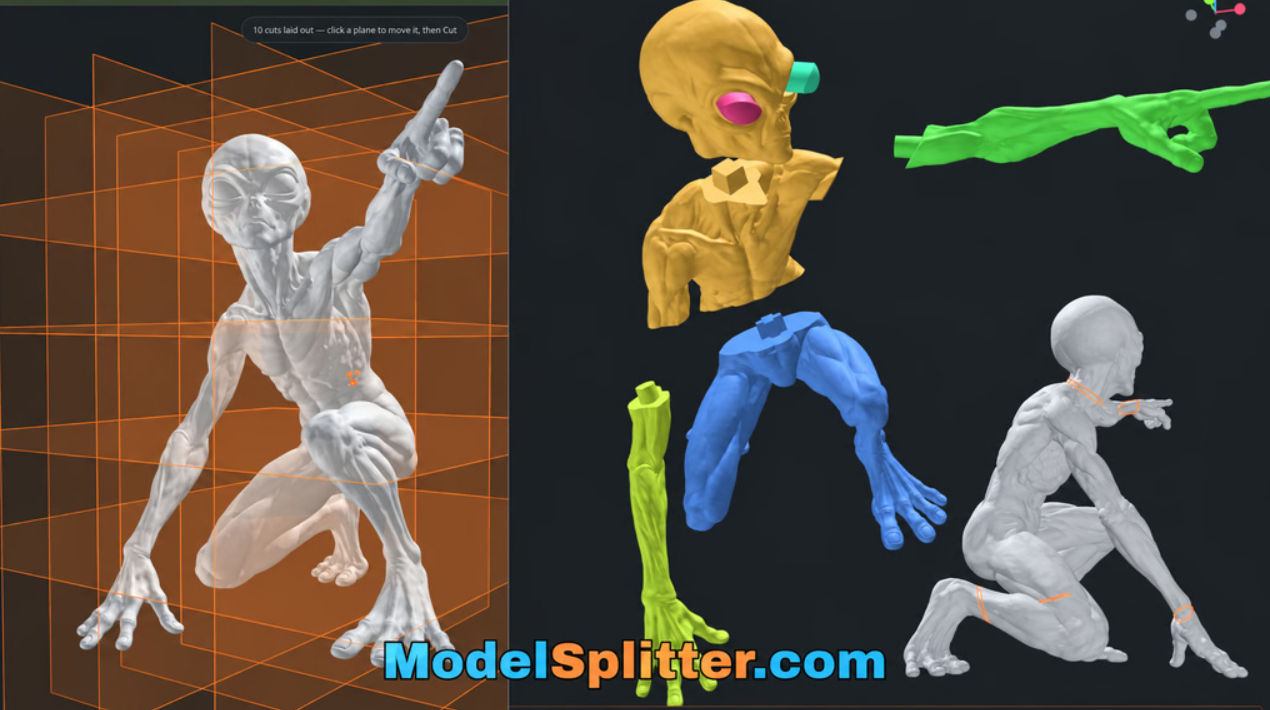
The tool provides seven cutting methods, including a plane, line, rope, and auto multi-plane options. These allow users to make precise cuts along natural seams or automatically generate splits based on the printer’s dimensions. The developer, Nick, emphasizes that the tool works with any mesh, including AI-generated models and 3D scans, without restrictions. This versatility is crucial for users working with diverse model types, from mechanical parts to organic shapes. The manual tools allow for greater control, enabling users to follow natural boundaries on the model, such as around a neck or a wrist, instead of slicing through detailed surfaces.
A new browser-based tool helps users split large 3D models and generate assembly guides.
ModelSplitter Launches Free Browser Tool for 3D Model Splitting
ModelSplitter’s Auto multi-plane feature is designed to minimize the number of parts by analyzing the model’s shape. Users input their printer’s build volume, and the software calculates the most efficient split. A default 5 mm margin is maintained at the edges to prevent parts from touching the bed’s limits. This approach is particularly useful for complex models that require multiple pieces. The developer’s example of a life-size figure, which a simple grid split would cut into 112 parts, came out at 58 with the multi-plane planner. This feature reduces the number of parts, which in turn reduces the effort required for assembly and post-processing.
The tool also includes options for creating joints between parts, such as pins, sockets, and magnets. These features help ensure that assembled models fit together correctly. The software automatically sizes the joints based on the cut face, reducing the need for manual adjustments during the assembly process. This automation streamlines the workflow, making it easier for users to manage large or intricate models. The default fit clearance is 0.2 mm, which was tested on a Bambu A1 with a 20 cm model. Adjustments can be made for different printers, but users are advised to test joints before committing to large projects.
Tool Offers Multiple Cutting Methods for Customized Splits
ModelSplitter is free to use during its beta phase. The developer has not provided specific details about future pricing, but a Pro version is set to launch on Kickstarter on November 3, 2026. Early-bird backers will have access to Pro features at a discounted rate, though exact pricing details remain undisclosed. This approach allows users to experience the full range of features before the Pro version is released. The beta phase also provides an opportunity for users to provide feedback, which the developer has indicated will shape future updates.
The Pro version will offer additional features beyond the current free version. While the exact nature of these features is not specified, the developer has indicated that the Pro edition will include advanced tools for model splitting and assembly. The Kickstarter campaign will also offer limited-time discounts for early supporters. This strategy aims to build anticipation and encourage early adoption. The Pro version is expected to provide more advanced tools, such as enhanced joint customization and improved export options, which may not be available in the free edition.
Users can provide feedback directly to the developer through a contact form on the website. The tool’s design prioritizes user input, with the developer stating that all feedback is reviewed. However, the sign-up form for the launch list has experienced technical issues, with some users reporting that it fails to load due to ad blockers. This issue highlights the importance of ensuring that the tool remains accessible to all users, regardless of their browser settings. The developer has acknowledged these challenges and is working to resolve them.
Pro Version to Launch on Kickstarter with Early-Bird Pricing
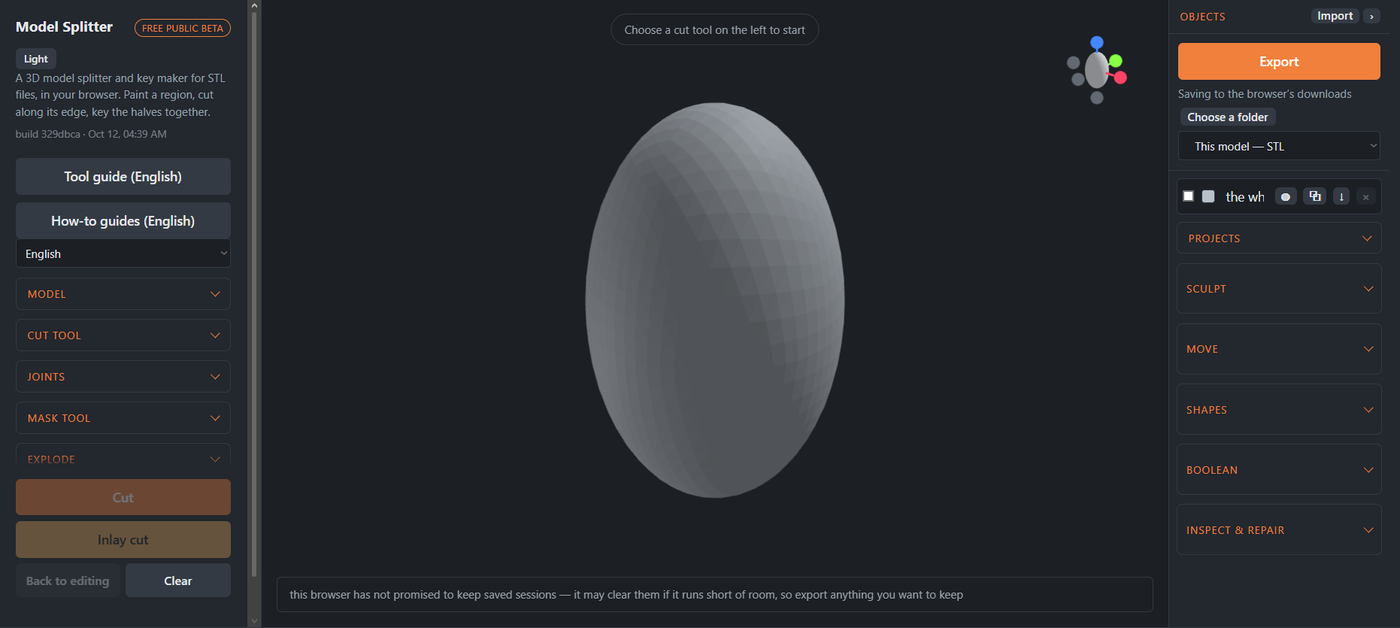
ModelSplitter’s workflow begins with uploading an STL or 3MF file to the browser. The software allows users to inspect and repair the model before making cuts. For large or complex models, the tool includes a mesh simplification feature that reduces file size without altering the original model for export. This feature is particularly useful for users working with heavy meshes, such as those from 3D scans. The simplification process ensures that the tool remains responsive without compromising the quality of the final print.
The tool is intended for users who need to print large or intricate models that exceed their printer’s build volume. It is particularly useful for hobbyists, makers, and small workshops looking to manage complex prints. The software’s ability to handle AI-generated and scanned models expands its potential applications. This versatility makes it a valuable tool for a wide range of users, from casual hobbyists to professional makers. The tool’s focus on user customization and flexibility sets it apart from existing slicing software.
The developer has not provided independent verification of the tool’s performance claims, such as the reduction of parts from 112 to 58 for a life-size figure. However, the logic behind the automatic multi-plane feature aligns with standard 3D printing practices. The tool’s focus on user customization and flexibility sets it apart from existing slicing software. This approach ensures that users have the freedom to tailor the splitting process to their specific needs, whether they are working on a simple mechanical part or a complex organic model.
Developer Focuses on User Feedback and Feature Development
ModelSplitter’s development is ongoing, with the developer actively working on improvements based on user feedback. The tool’s beta phase allows users to test its features and provide input before the Pro version is released. This iterative approach ensures that the final product meets the needs of its target audience. The developer has emphasized the importance of user feedback in shaping the future of the tool, indicating that the final version will be heavily influenced by the experiences of beta testers.
As the Pro version approaches its Kickstarter launch, users are encouraged to join the waiting list for updates. While the exact timeline for future features is not clear, the developer has indicated that the tool will continue to evolve based on community input. The focus remains on making 3D model splitting and assembly more accessible and efficient. This commitment to continuous improvement ensures that the tool will remain relevant and useful for a wide range of users in the 3D printing community.
Log in to leave a reply. Every comment is moderated before it appears publicly.