Published October 16, 2026 at 9:31 PM EDT
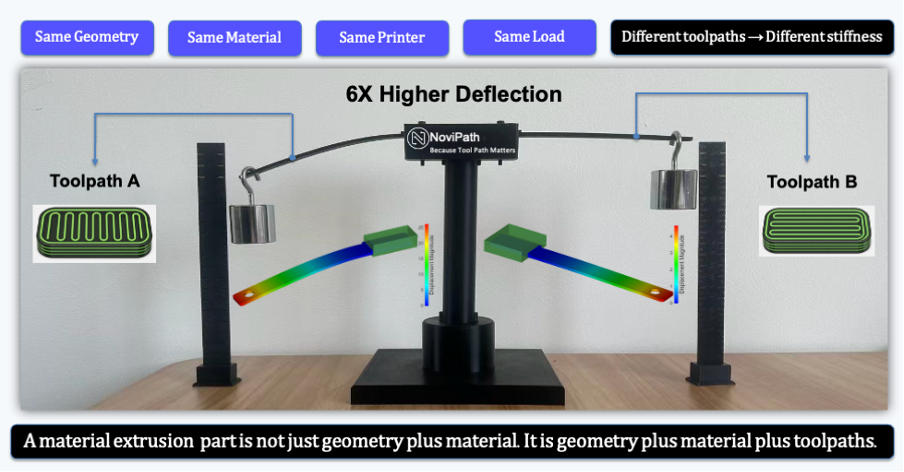
Novineer’s test data shows that FDM parts can vary significantly in strength based on internal toolpath design, with one configuration showing six times more stiffness.
Toolpath Design Drastically Affects FDM Part Performance
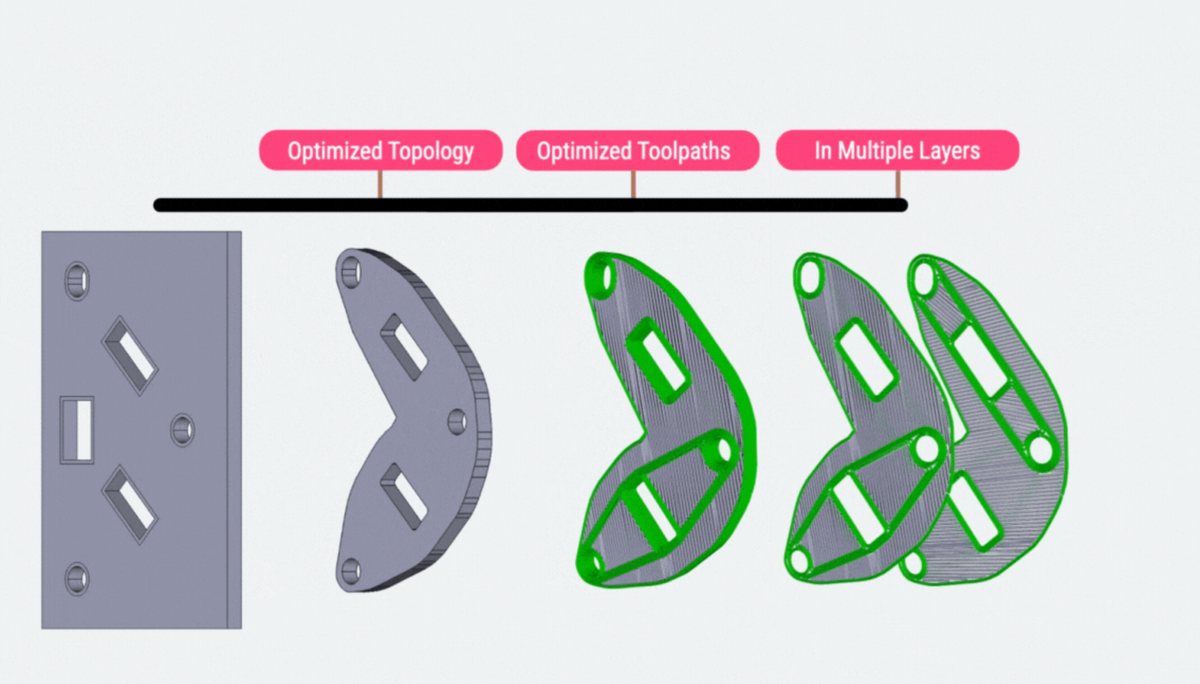
The test data was published by Novineer CEO Ali Tamijani in a guest column for TCT Magazine. He argues that the final properties of an FDM part are not determined until the slicing process defines the material’s placement. This insight aligns with the company’s focus on toolpath-aware design and simulation. Tamijani’s column details how identical beams, printed under the same conditions, can show drastically different stiffness due to variations in internal toolpath configuration. This underscores the need for engineers to consider toolpath design as a critical factor in FDM part development.
The research involved three high-performance materials: Nylon 12CF, Antero 800NA, and ULTEM 9085. These materials were tested under consistent conditions, with the only variable being the internal toolpath configuration. The results suggest that toolpath design can have a major impact on mechanical performance. The study included beams subjected to the same loading conditions, with one beam demonstrating significantly more stiffness than the other despite being made from the same material and printed on the same machine.
Stratasys Collaboration Validates Toolpath Impact
The beams used in the test were subjected to the same loading conditions. One beam demonstrated significantly more stiffness than the other, despite being made from the same material and printed on the same machine. This indicates that the internal structure, dictated by the toolpath, plays a critical role in part performance. The findings challenge traditional methods of analyzing FDM parts, which often rely on material properties and CAD models without considering the slicing process as a key design factor.
The study also included shear coupons tested with different raster orientations. The coupons were printed with straight, cross, and diagonal toolpaths. The diagonal configuration showed a 3.5 times increase in stiffness compared to the straight orientation, demonstrating the influence of toolpath direction on material behavior. Rosette strain gauges were used to measure strain in multiple directions, capturing the anisotropic nature of the printed parts and highlighting the importance of toolpath orientation in load distribution.
Rosette strain gauges were used to measure strain in multiple directions. This allowed researchers to capture the anisotropic nature of the printed parts. The data showed that the diagonal toolpath created a crisscross pattern that distributed load differently than a straight raster. The results indicate that the orientation of the toolpath significantly affects how the part responds to mechanical stress. This finding has important implications for the design and simulation of FDM parts, particularly in applications where mechanical performance is critical.
Material and Geometry Remain Constant in Testing
The findings suggest that traditional methods of analyzing FDM parts may be insufficient. Engineers often rely on material properties and CAD models, but the test results indicate that the slicing process must be considered as a critical design factor. The study highlights the need for more comprehensive testing and simulation that accounts for the variability introduced by different toolpath configurations. This could lead to more accurate predictions of part performance and improved design practices.
Novineer’s approach to design includes toolpath-aware simulation, which integrates material orientation and load distribution from the start. This method allows for more accurate predictions of part performance and can lead to more efficient designs. The company’s software leverages cloud-based computing to handle complex simulations and design iterations, enabling parallel processing that speeds up the design and testing phases without compromising accuracy.
The company’s software leverages cloud-based computing to handle complex simulations and design iterations. This technology enables parallel processing, which speeds up the design and testing phases without compromising accuracy. By integrating toolpath-aware simulation, Novineer’s software helps engineers account for the effects of slicing on part performance, leading to more reliable and optimized designs. This approach is particularly valuable in applications where mechanical properties are critical.
Anisotropy and Toolpath Orientation Matter
The research underscores the importance of considering toolpath design in FDM applications. Engineers and designers must account for how the slicing process affects the final part’s mechanical properties, especially when working with high-performance materials. The study demonstrates that even small changes in toolpath configuration can have a significant impact on part strength and stiffness. This highlights the need for more detailed specifications and testing procedures that reflect the variability introduced by different slicing strategies.
The test results also highlight the need for more detailed specifications in FDM part design. Current standards may not fully capture the variability introduced by different toolpath configurations, which could affect the reliability of printed components. The findings suggest that material data sheets and test reports should include information about the toolpath used to produce the part, as this can significantly influence the mechanical properties of the final product.
As FDM technology continues to evolve, the role of toolpath design in determining part performance will become increasingly important. Novineer’s research provides valuable insights into how this aspect of the process can be optimized for better outcomes. The study emphasizes the need for engineers to treat toolpath design as a critical component of the overall design process, rather than an afterthought. This shift in perspective could lead to more reliable and high-performing FDM parts in a wide range of applications.
Log in to leave a reply. Every comment is moderated before it appears publicly.