Published October 6, 2026 at 3:34 PM EDT
A 3D-printed PLA filter developed by Waterloo researchers captures 90% of microplastics through chemical modifications and structural design.
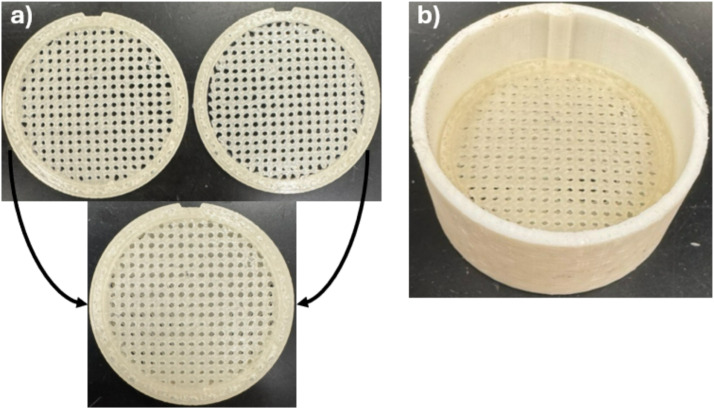
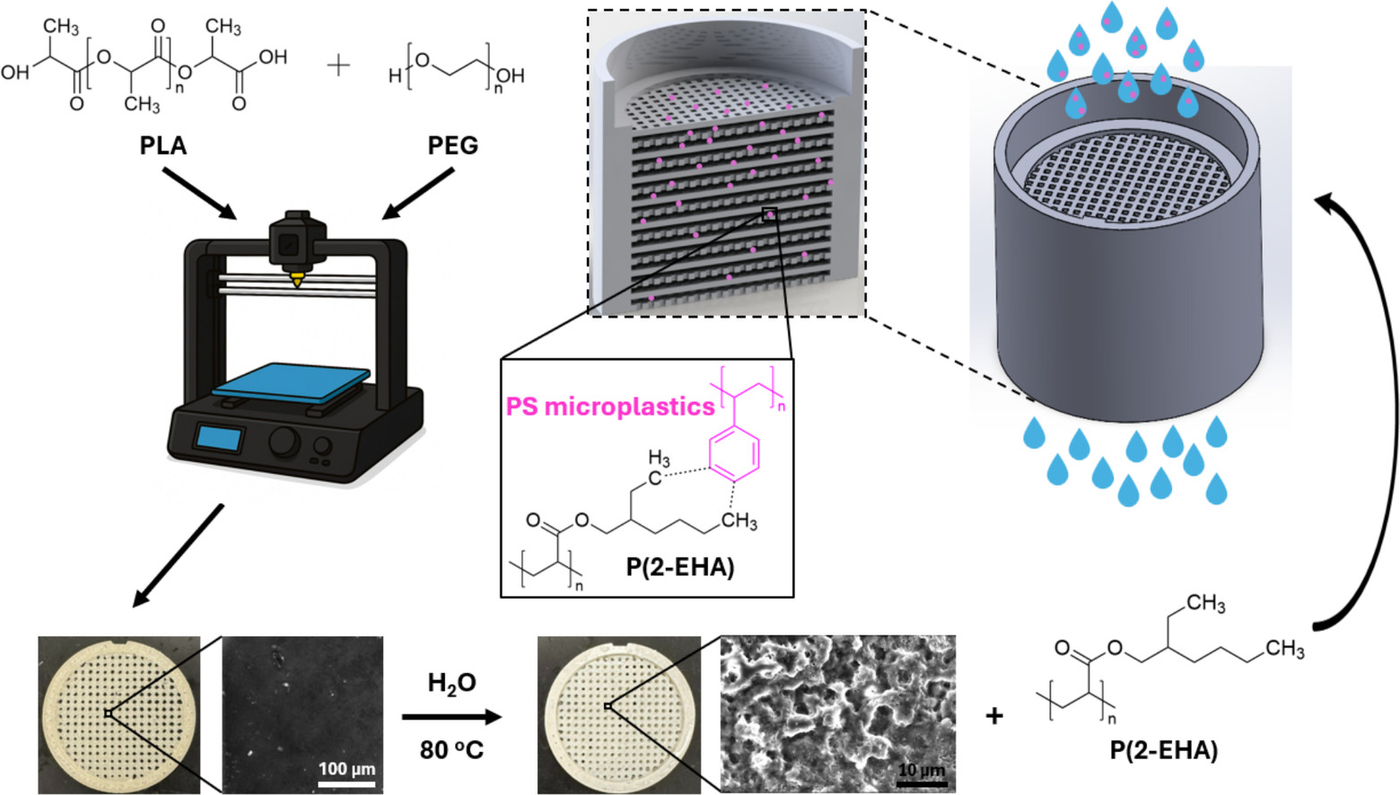
A 3D-printed filter developed by researchers at the University of Waterloo removes 90% of microplastics from water using a combination of structural design and chemical treatments. The filter is made from polylactic acid (PLA), a biodegradable plastic commonly used in 3D printing. The system relies on a stack of printed discs with a specific arrangement of holes to guide water through a tortuous path. This design increases the likelihood of microplastics coming into contact with the filter surfaces, enhancing capture efficiency.
Filter Design and Material Modifications
Each disc is 39 mm in diameter and features an offset grid of 1 x 1 mm holes. When stacked, the holes are aligned in a way that forces water to change direction repeatedly, increasing the likelihood of microplastics coming into contact with the filter surfaces. This structural approach is key to the filter's functionality, as FDM printing alone cannot create the fine pores needed for effective filtration. The design ensures that water flows through a complex path, maximizing interaction with the filter material.
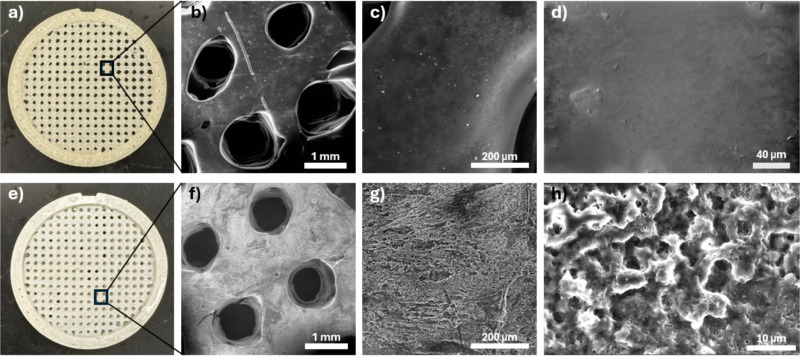
The researchers introduced a sacrificial additive to the PLA material to create the necessary small pores. By blending low-molecular-weight polyethylene glycol (PEG) into the PLA at 10 parts per hundred resin, they created a structure that, when dissolved, leaves behind pores ranging from 100 nanometers to 10 micrometers. This process enhances the filter's ability to trap microplastics. The PEG acts as a temporary component that is removed after printing, leaving behind a porous structure that improves filtration performance.
Surface roughness also plays a role in improving microplastic capture. After dissolving the PEG, the resulting surface irregularities help microplastics adhere to the filter. Testing showed that a stack of eight modified discs captured 37% of microplastics, compared to 16% with unmodified PLA. This increase highlights the importance of surface chemistry in the filtration process. The roughened surfaces provide more points of contact for microplastics to stick, increasing the overall efficiency of the system.
Structural Approach to Water Filtration
The filter's efficiency improves with the number of layers. A 20-layer stack achieved 90% removal of polystyrene microplastics in tests. However, the study notes that the system is a proof of concept, and further research is needed to optimize performance and explore reusability. The increase in efficiency with more layers suggests that the design can be scaled up for larger applications, though practical limitations remain to be addressed.
The researchers used a multi-layer approach to combine different capture mechanisms. Each layer compensates for the limitations of the previous one, creating a more effective filtration system. This layered design allows for greater surface area and more opportunities for microplastics to be trapped as water passes through. The combination of structural and chemical modifications ensures that each layer contributes to the overall efficiency of the filter.
The study emphasizes that the primary innovation lies in the material modifications rather than the 3D printing process itself. While the printer creates the coarse structure, the chemical treatments are responsible for the fine filtration capabilities. This distinction highlights the role of material science in advancing filtration technologies. The success of the filter depends on the post-processing steps that enhance its functionality beyond what the printing process alone can achieve.
Chemical Enhancements for Microplastic Capture
The filter's performance is influenced by the size of the microplastics. While it effectively captures particles up to 10 micrometers, the efficiency decreases for smaller particles. This limitation suggests that the system may be most effective for specific types of microplastics and may require additional steps for complete filtration. The study indicates that further refinement is needed to address the challenges posed by smaller particles.
The researchers also considered the environmental impact of the filter. PLA is biodegradable under commercial composting conditions, but it does not break down easily in natural environments. However, the study suggests that the filter's contribution to microplastic pollution is negligible compared to the contaminants it removes. The use of biodegradable materials aligns with sustainability goals, though the long-term environmental effects of the filter remain to be fully understood.
Performance and Limitations of the System
The filter's design allows for potential scalability and low-cost production. Using 3D printing, the structure can be customized for different applications, and the materials are widely available. This makes the system a viable option for small-scale or community-based water filtration projects. The simplicity of the design and the availability of PLA make it an attractive solution for addressing microplastic contamination in various settings.
The study does not provide details on the long-term durability or reusability of the filter. While the initial tests show high efficiency, further research is needed to determine how many times the filter can be used before its performance degrades. This factor will be important for real-world applications, as the ability to reuse the filter could significantly impact its cost-effectiveness and environmental footprint.
Overall, the Waterloo researchers' work demonstrates how 3D printing can be used in conjunction with chemical treatments to create effective filtration systems. The approach offers a low-cost, scalable solution for removing microplastics from water, with potential applications in both industrial and community settings. The combination of structural design and material modifications highlights the potential for further innovation in water filtration technologies.
Log in to leave a reply. Every comment is moderated before it appears publicly.